Interview · November 2026
Whatever the canvas is becoming
On colour, flowers, honesty, and a basement studio in Lviv.
What are you currently exploring in your artistic practice that excites you the most?
I’m exploring how a painting can carry a mood rather than describe a form. For me, colour and emotion matter more than accuracy. I often try to step away from floral themes and experiment with other subjects, but somehow I always come back to flowers. Maybe that will change, maybe not. If flowers remain my main theme, my challenge is to keep them alive and surprising, never repetitive. Each bouquet becomes a new emotional landscape, a different state of mind.
Is there a particular artwork that best represents your practice today?
I would choose Still Life, the long, narrow vertical piece. Many of my works share this title, but this one feels especially close to who I am as a painter today. It is light and airy, and I painted it quite quickly, almost in one breath, which is rare for me, as my paintings usually go through many versions. It brings together what I care about most: expressive colour, a simple, almost naive composition, and a sense of movement that keeps the flowers alive. The unusual vertical format pushed me to rethink the bouquet, letting it rise and stretch rather than sit still. For me, this work marks the moment when I stopped trying to make a “beautiful” painting and started making an honest one, trusting my first impulse instead of overworking the canvas.
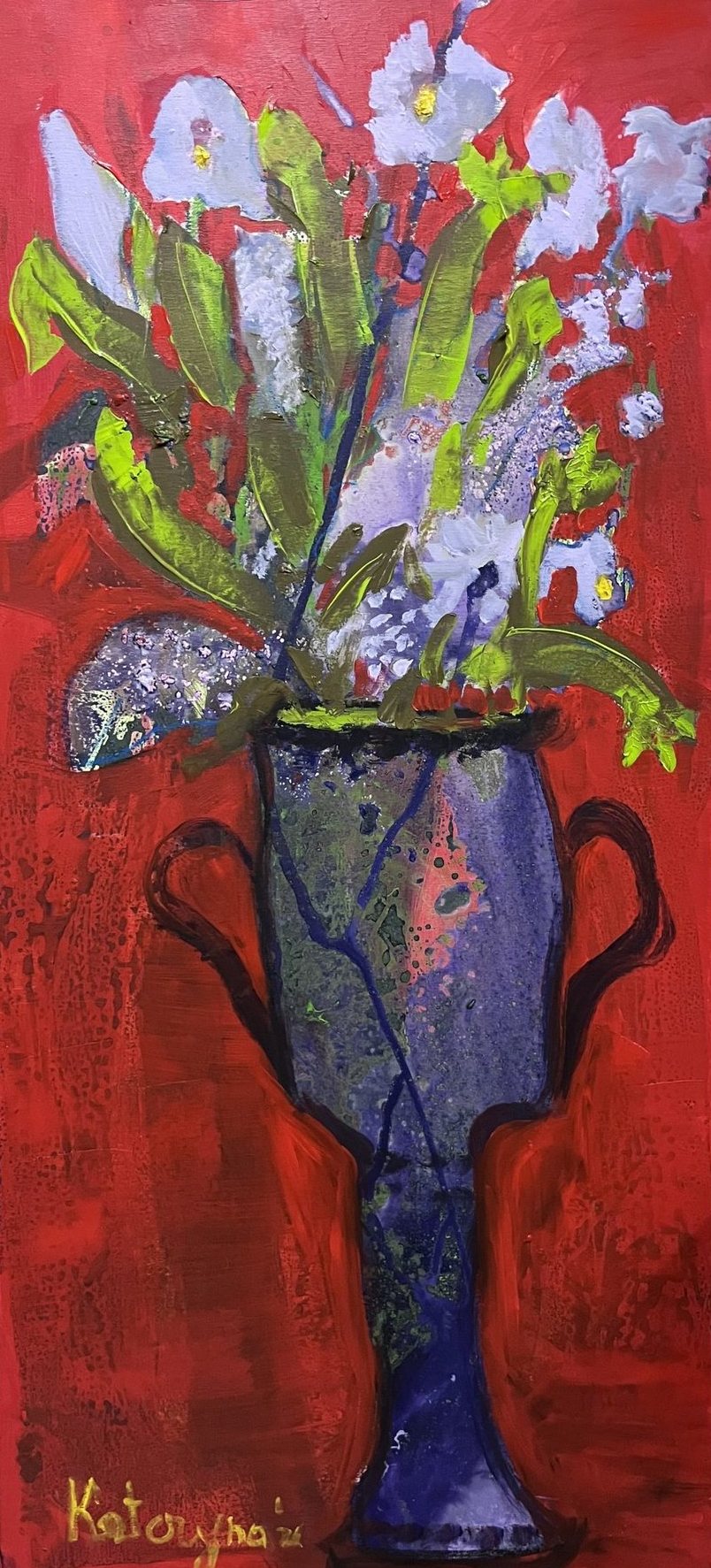
I stopped trying to make a “beautiful” painting and started making an honest one.
What experiences, places or moments have had the greatest influence on the artist you are today?
I always believed that travel was what filled me up and inspired me. But when I began spending most of my time abroad, I realised that what truly shaped me was Lviv, the city where I was born and grew up: its architecture, its streets, its mood and its rhythm. It is not a big city, and that gave a special intimacy and fullness to the way I feel the world and the way I work. Of course, my travels, both personal and professional, keep influencing me and adding new layers. But the foundation, the very essence of who I am as an artist, was formed at home.
Is there a story about your artistic journey that people don’t usually know?
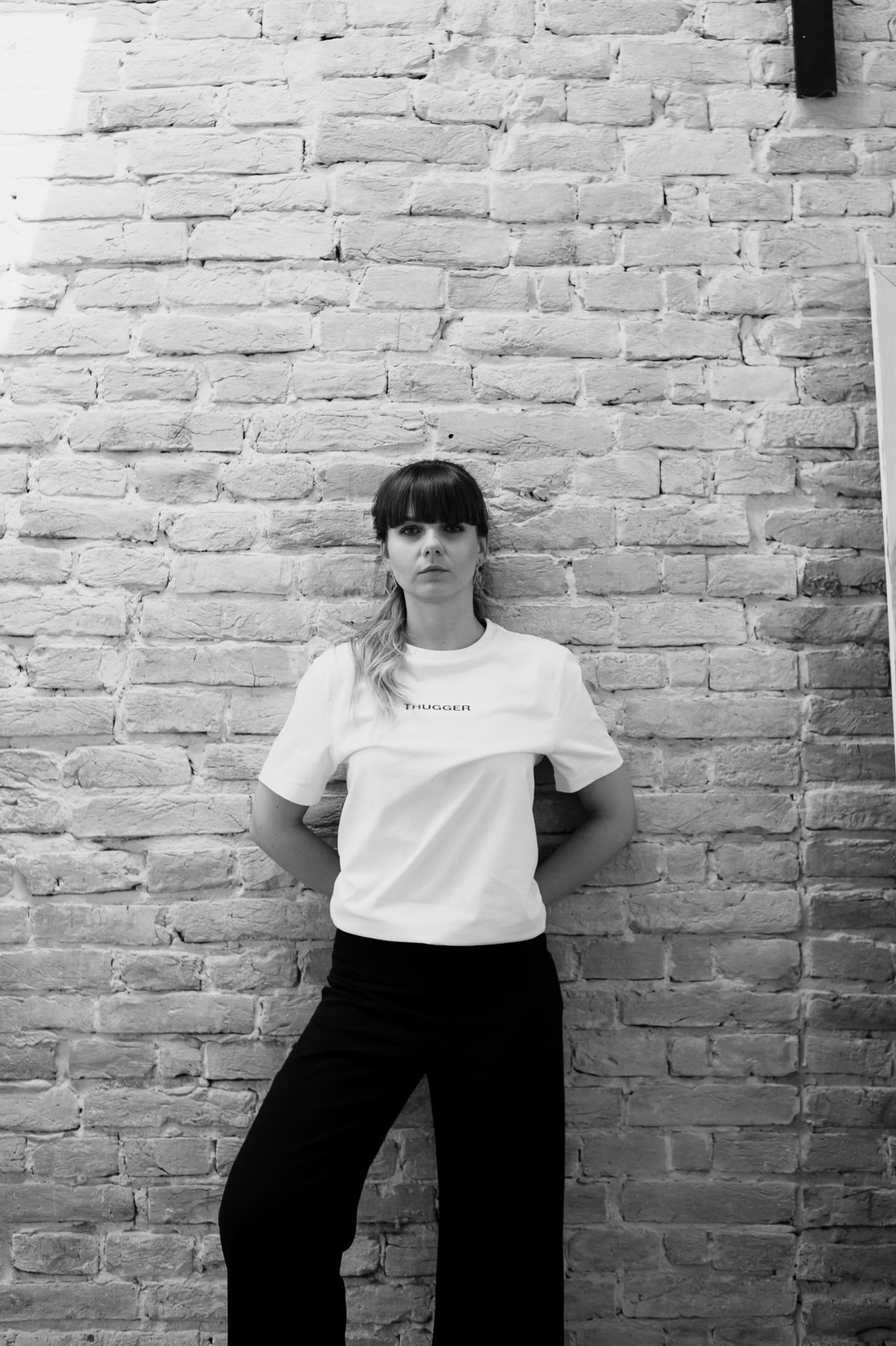
Most people in my circle, colleagues, friends and the professional community I work with, know me as a cultural manager and curator. For a long time my own painting stayed in the background, something closer to a personal hobby than a profession. But it has been with me for so many years, quietly and steadily. In difficult moments, when my professional life felt uncertain or exhausting, it was painting that held me together and gave me back a sense of meaning. At some point I realised that it deserved more than the leftover hours. So I decided to give creativity more space in my life, and I’m consciously moving in that direction now, step by step.
Are you currently working on anything you’d like people to know about?
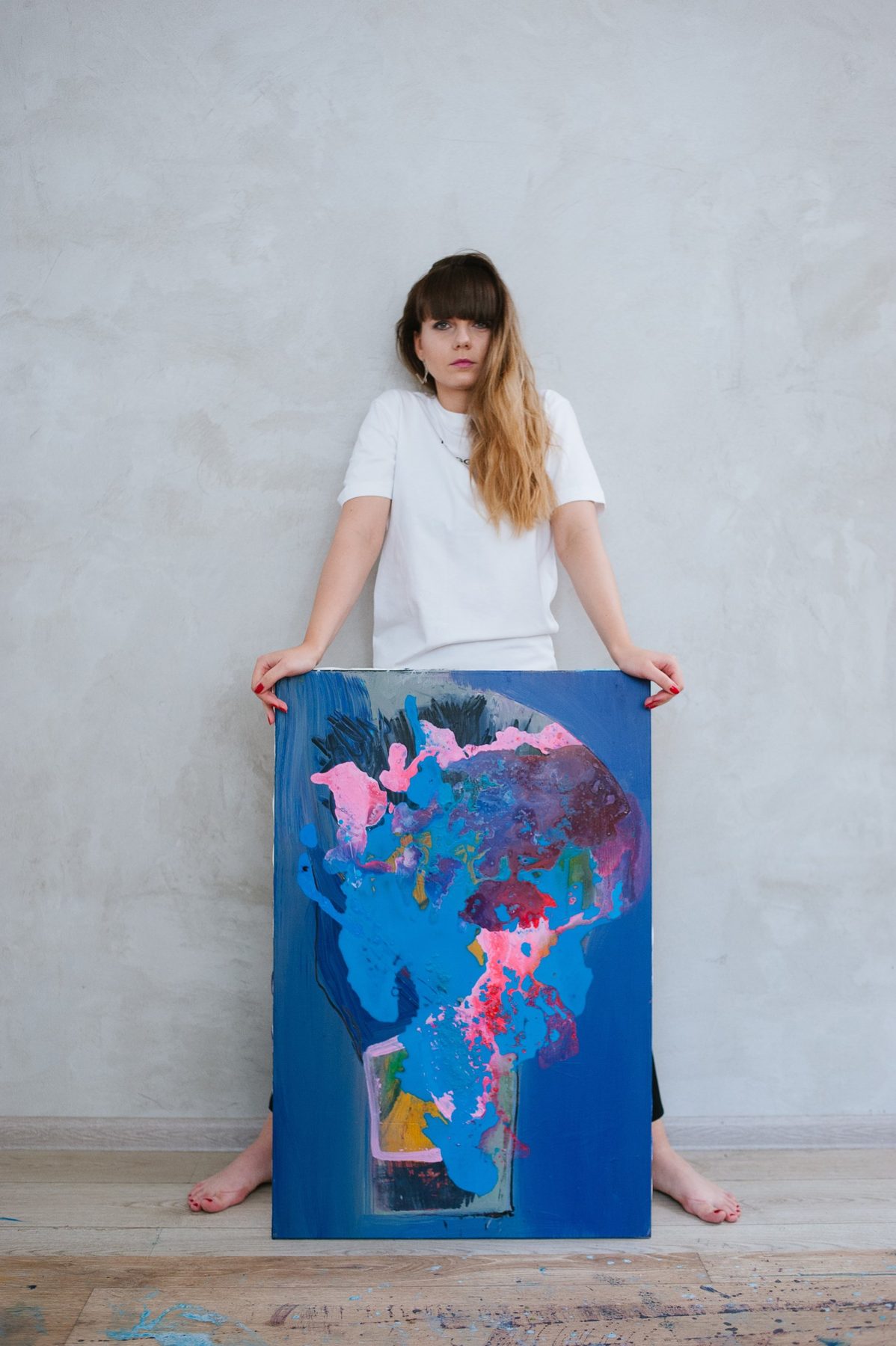
It’s a difficult question for me, because my practice is quite unpredictable. I rarely know in advance what I’m working on. The result reveals itself only in the process, and it changes constantly. A painting the viewer finally sees may have had several, sometimes dozens, of earlier versions underneath. I’m not one of those artists who see the finished image in their mind and then simply bring it to life. For me it is a truly open creative process, fascinating on the one hand and long and exhausting on the other. So what I’m working on right now is, honestly, whatever the canvas is becoming.
What I’m working on right now is, honestly, whatever the canvas is becoming.
Growing up in your father’s art studio, how did those early experiences shape your identity as an artist?
My father’s studio was my first school. It was in a basement in Lviv, where I drew, where we developed photographs together, and where I helped him prime his canvases. Today I understand how unusual and special those things were, but back then they were simply my everyday life, the world I grew up in. For a long time I didn’t realise how interesting and valuable this way of seeing and living could be for other people. I never had to “discover” art, because it was the air I breathed. That gave me a quiet confidence: painting was never something exotic or unreachable, but a daily, honest kind of work. Watching my father, I learned that discipline matters as much as inspiration, and that a painter grows slowly, canvas by canvas.
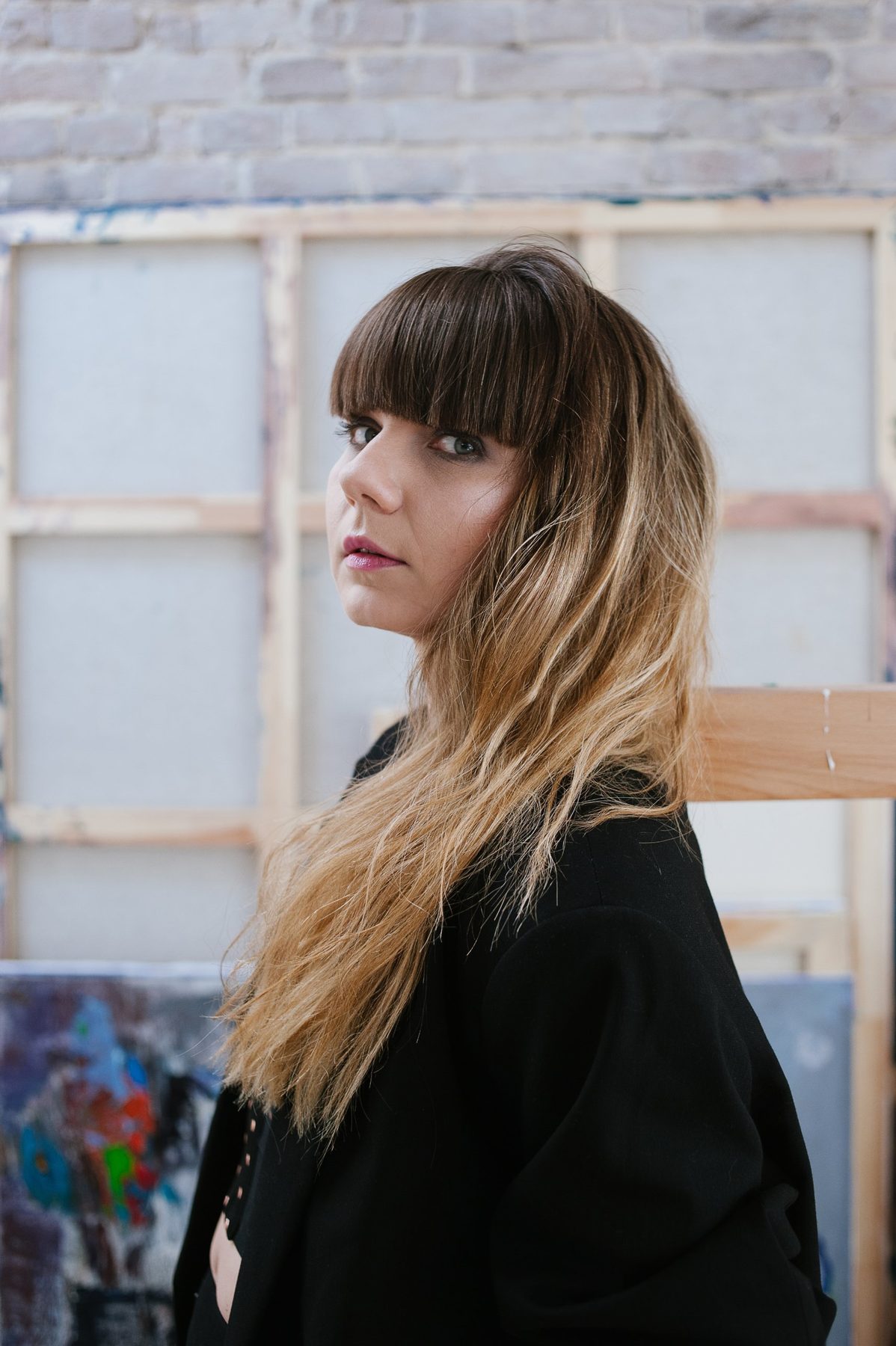
My father’s studio was my first school.
How does your background in art history and art management inform your practice as a painter?
In theory, my background in management and years of researching the art market should help my creative practice. In reality, I feel a certain conflict. Playing both roles at once is very hard, and sometimes it gets in the way. I’ve come to believe that the natural division between artists on one side and gallerists, curators and managers on the other exists for a good reason. Very few people in the world can truly combine both well. At the same time, knowing art history and the market makes me more sensitive to art itself. It also lets me look at this industry realistically, because it is often complicated and often unfair, and as an artist you need to be aware of that.
What draws you to floral subject matter, and how do you translate its vitality onto canvas?
In my professional life, researching the art market and curating exhibitions, I deal with complex ideas through words. Painting is where I let that go. For me, the subject is secondary. What matters is visual perception: a sense of harmony, what I feel while painting and when I look at the finished work. Flowers give me the freedom to follow that feeling. My paintings are simple in content but complex in their making, through layers, colour and texture. And a still life is never really “still”: flowers are alive and changing every hour, and so are my paintings, which keep transforming as I work on them, layer after layer.
How do you bring together the simplicity of naive art and the bold colour of German expressionism?
I don’t see them as opposites. Both are about sincerity. Naive art gives me permission to simplify, to flatten space and trust a childlike directness of form. Expressionism gives me courage with colour, letting it be loud, emotional and not “realistic”. In my paintings the composition is often simple, almost naive, while the colour carries the intensity. That balance between calm structure and emotional colour is where I feel most myself.
Can you walk us through your creative process?
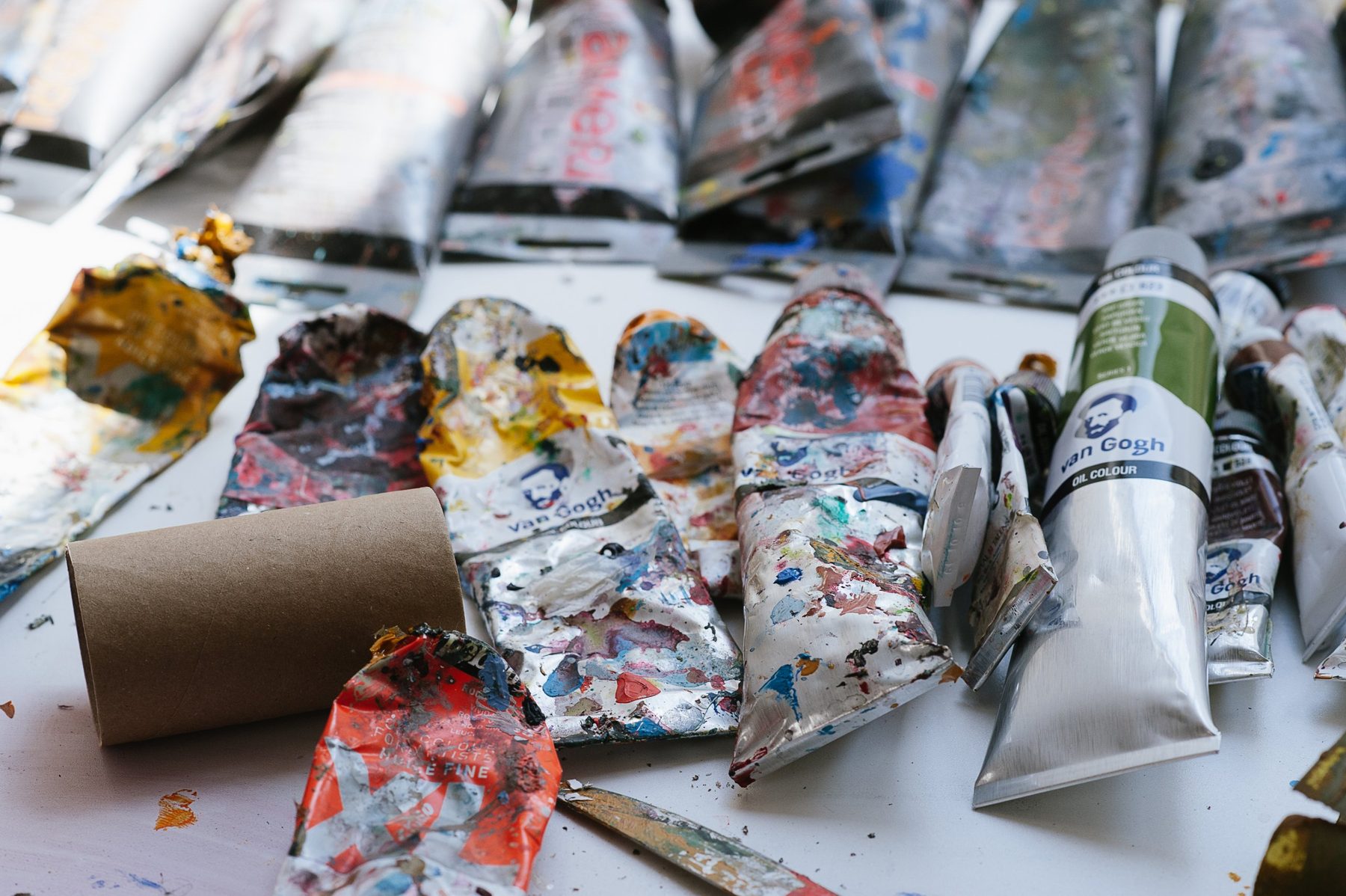
My process starts with play. I begin with stains and patches of colour, mixing paints, adding oil, sometimes ink or charcoal, and watching what visual effects appear. Then, within these abstract forms, I start looking for images that feel familiar to me, and I develop them more deliberately with acrylic and oil. Sometimes this cycle repeats several times, until I finally see something that truly satisfies me. What excites me most is this moment of discovery, when an image I didn’t plan suddenly emerges from the chaos of colour, and every layer underneath keeps a trace of the painting’s history.
Every layer underneath keeps a trace of the painting’s history.
Interview prepared for Singulart Magazine, 2026.